
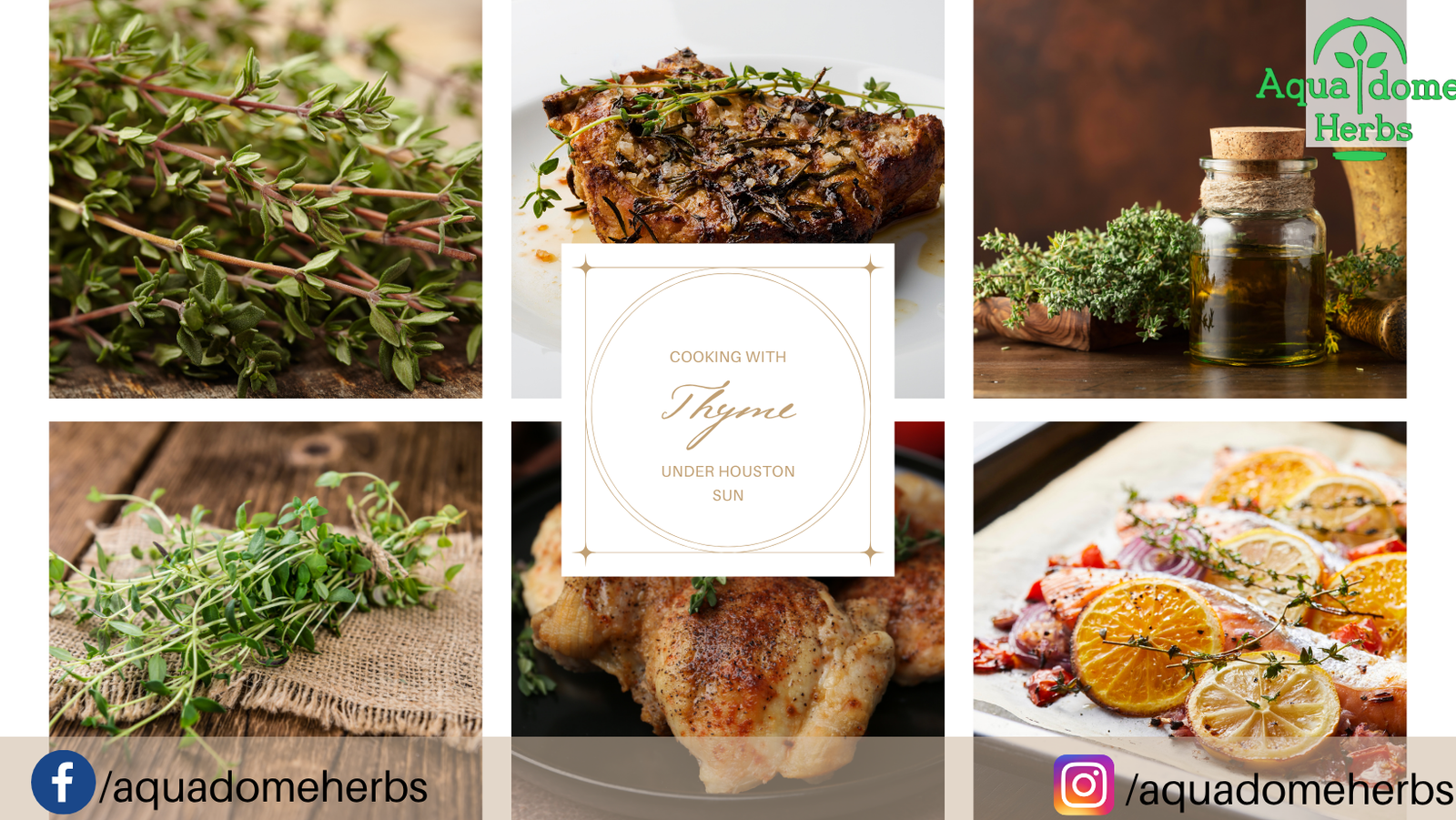
Houston heat doesn’t whisper — it settles in, wraps around you, and demands that your kitchen adjust accordingly. When temperatures climb and heavy meals feel impossible, herbs become your best friend. Among them, thyme stands quietly confident. Earthy, slightly minty, and beautifully aromatic, thyme brings depth without heaviness. In a city like Houston, where summer stretches long and humid, learning to cook lighter — without sacrificing flavor — becomes a form of self-care. Fresh thyme makes that shift effortless. (Reference: USDA FoodData Central; Texas A&M AgriLife Extension – Herbs in the Home Garden)
Why Thyme Works So Well in Hot Weather
Thyme thrives in warm climates, which makes it perfectly at home in Houston gardens and farmer’s markets. Unlike heavier spice blends that can overwhelm summer dishes, thyme adds brightness while still grounding a recipe. Its essential oils — particularly thymol — carry antimicrobial and aromatic properties, which is one reason it has been valued in Mediterranean cooking for centuries. In hot weather, when digestion can feel sluggish and appetites lighter, thyme enhances simple foods like vegetables, grilled proteins, and broths without adding weight. (Reference: National Center for Biotechnology Information – Thymus vulgaris studies; Mediterranean Diet Research Overview)
How to Use Fresh Thyme Without Overpowering a Dish
Fresh thyme is stronger than it looks. The tiny leaves hold concentrated flavor, especially in summer when the sun intensifies their oils. Strip the leaves gently from the stem and use them toward the end of cooking for brighter notes. For grilled foods, add whole sprigs directly onto coals or into marinades. For chilled dishes — think yogurt sauces or lemon vinaigrettes — finely chop fresh leaves to avoid woody texture. The key is balance: thyme should whisper through the dish, not shout. (Reference: University of Illinois Extension – Using Fresh Herbs; Culinary Institute of America Herb Guidelines)
Recipe 1: Houston-Style Lemon Thyme Grilled Chicken
When it’s too hot to stand over a stove, grilling becomes the hero.
Ingredients:
- 2 boneless chicken breasts
- 1 tablespoon fresh thyme leaves
- Juice of 1 lemon
- 2 tablespoons olive oil
- 2 cloves garlic (minced)
- Salt and black pepper to taste
Method:
- Mix lemon juice, olive oil, garlic, thyme, salt, and pepper.
- Marinate chicken for at least 30 minutes (overnight if possible).
- Grill on medium heat for 5–7 minutes per side until fully cooked.
- Rest for 5 minutes before slicing.
The result is bright, citrusy, and light enough for a humid evening. Serve with cucumber salad or grilled zucchini. It tastes like summer without weighing you down. (Reference: USDA Safe Grilling Temperatures; American Heart Association – Healthy Grilling Tips)
Recipe 2: Chilled Thyme & Cucumber Yogurt Bowl
On days when Houston humidity feels overwhelming, this cooling bowl feels like relief in edible form.
Ingredients:
- 1 cup plain Greek yogurt
- 1 small cucumber (finely diced)
- 1 teaspoon fresh thyme (finely chopped)
- 1 tablespoon lemon juice
- Pinch of salt
- Drizzle of olive oil
Method:
- Combine yogurt, cucumber, thyme, lemon juice, and salt.
- Chill for 20–30 minutes.
- Drizzle olive oil before serving.
Enjoy with warm pita, grilled shrimp, or simply as a side dish. The thyme cuts through the creaminess and adds an herbal freshness that feels clean and calming. (Reference: Harvard T.H. Chan School of Public Health – Yogurt & Gut Health; USDA Herb Usage Guide)
Recipe 3: Summer Thyme Tomato Skillet
Tomatoes in Texas heat become intensely sweet — thyme balances that sweetness beautifully.
Ingredients:
- 2 cups fresh cherry tomatoes
- 1 tablespoon olive oil
- 1 teaspoon fresh thyme leaves
- 1 clove garlic (thinly sliced)
- Pinch sea salt
Method:
- Heat olive oil in a skillet.
- Add garlic and sauté lightly.
- Toss in tomatoes and cook just until they begin to blister.
- Sprinkle thyme and salt right before turning off heat.
Serve over toasted sourdough or alongside grilled fish. It’s simple, fragrant, and made for evenings when the sun finally starts to set. (Reference: Texas A&M AgriLife – Tomato Growing Guide; Journal of Food Science – Herb Volatile Compounds)
The Emotional Side of Cooking with Herbs
Cooking in extreme heat can feel exhausting. But herbs change the experience. Instead of heavy sauces or long cooking times, thyme invites simplicity — fresh ingredients, quick cooking, open windows, lighter plates. It reminds us that food doesn’t have to be complicated to be meaningful. A sprig of thyme can transform grilled chicken into something memorable. A spoonful in yogurt can turn an ordinary bowl into comfort. In Houston’s long summers, that simplicity becomes a quiet luxury. (Reference: Mediterranean Diet & Lifestyle Studies; Culinary Wellness Research Reports)
Disclaimer
This blog is for informational and culinary inspiration purposes only. While thyme has traditional uses in cooking and herbal practices, it is not intended to diagnose, treat, cure, or prevent any medical condition. Individuals who are pregnant, nursing, allergic to herbs in the Lamiaceae family, or taking medications should consult a qualified healthcare professional before significantly increasing herbal intake. Always practice proper food safety and cooking temperatures when preparing meals. (Reference: FDA Dietary Supplement Guidelines; Mayo Clinic – Herbal Supplement Safety)
Under the Houston sun, cooking becomes less about complexity and more about balance. Thyme helps you find that balance — fresh, aromatic, and perfectly suited for hot weather living.